|
|

|
|

Reshaping Attention and Inclusion Strategies for Distinctively vulnerable people among the forcibly displaced
Who is vulnerable and what is the reason of using the notion of vulnerability instead of, for instance, precarity, inequality, disadvantages, deprivation, or various shortages (of wellbeing, autonomy, capability, resilience etc.)?
Consequently, in addition to dodging all the problems that the notion of vulnerability might bring to the table, why do we use this particular concept instead of some other?
|
|
Fieldwork with Forcibly Displaced People and stakeholders active for inclusion processes
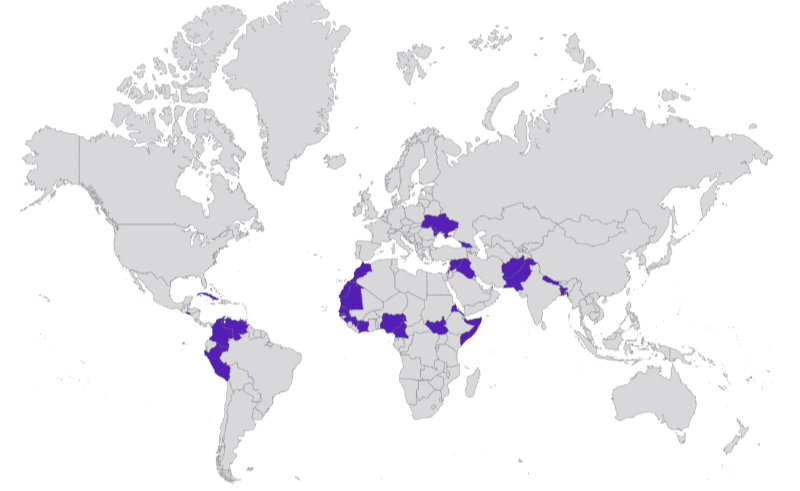
Within RAISD project, altogether 178 interviews to forcibly displaced people were carried out, including 25 interviewees in each of the participating countries: Spain, Italy, Turkey, Hungary, Lebanon and Jordan, with the exception of Finland, that included 28 interviews. 60 % out of the total sample were women (107) and 40% men (71). The vast majority -116 persons, up to 65 %- were migrants fleeing from Middle East countries, and of those, practically all the interviewees in Turkey, Lebanon and Jordan were of Syrian origin. Also in Hungary, 16 out of 25 interviews were made to migrants from Middle East. In total, 43 African migrants were interviewed, summing 24% of the total, most of them from Western Africa. In Italy, all the interviewees were Africans, and in Spain, the sample included 9 of persons of African origin, in Hungary, 6. South Americans represented the largest portion of interviewees in Spain, altogether 11 persons. In the global sum of the interviewees, the numbers of forcibly displaced people from other regions were minor, only 2 persons were from the East (Nepal and Bangladesh) and 4 from Eastern Europe/former Russian area, including Moldova, Georgia and Ukraine.
Chart: Geographical distribution of 178 interviewed Highly Vulnerable Forcibly Displaced People
|
|
In terms of vulnerabilities found, these vary depending on the local context and type of migrants interviewed, but there are some common features. These include trauma as a results of the often long and troublesome migration journey, during which many have suffered physical and sexual violence, have witnessed murders, forced labour and slavery. The majority have migrated by irregular means, victims of human trafficking, human smuggling and dangerous death threading journeys by sea or land. Libyan camp and detention centre survivors share terrifying stories of human rights violations and extreme violence. Another factor that augments the vulnerability of many of these forcibly displaced people is the lack of education, the school drop-out due to war and poverty are frequent among them. The fate of the ones with further education is usually better and they feel better integrated. Also, many have large families to support either with them or back in the home country. Many families have been torn apart in the exile process, some have lost family members who have been killed or kidnapped in the conflict areas. PTSD (post- traumatic stress disorder) and other psychological disorders are therefore frequent among them, though many do not mention these aspects directly. Also, many migrants suffer from chronicle and other diseases, some of the result of the hardness and lack of proper food and sanitation conditions during the journey.
Most of the interviewees are asylum seekers and subsist with very scarce income, unemployment among them is extended and so is the adaptation to the transit or hosting countries society. Very many migrants found life better in the home countries and feel nostalgic, though there are cases of extreme suffering and trauma experienced back in the old country which makes them want to forget everything about their origin, making them feel more at safe in the new country. A rather small number of the persons interviewed have started to feel integrated in the new country and are grateful for the assistance they receive from the authorities and NGOs. The vast majority have complaints about the asylum process and many offer ideas for its improvement. Not all have access to assistance programs, though many are included in the compulsory integration paths.
The fieldwork was carried out during summer and autumn 2019, and the sample in each country was decided considering the most vulnerable persons among forcibly displaced people. The selection of the sample can be considered intentional in all of the participating countries, as it does not have a proportional distribution in terms of the characteristics and number of different types of forcibly displaced people population in the region. It is rather based on RAISD project’s objective of locally exploring and detecting some of the most vulnerable persons among the forcibly displaced people in the 7 countries included in the project. In order to design tailored action and inclusion strategies to some of the most vulnerably publics among forcibly displaced people, a deep understanding of their needs and vulnerabilities within each context is required and the above mentioned interviews give important insights for it. People themselves are not vulnerable, but the contexts and conditions create and contribute to turning them vulnerable.
Further references to the Fieldwork’s methodological approach at:
Interested in learning more about national findings?
|
|
About RAISD
RAISD stands for Reshaping Attention and Inclusion Strategies for Distinctively vulnerable people among the forcibly displaced. This project has received funding from the European Union’s Horizon 2020 research and innovation programme under grant agreement No 822688.
Date of project: 01/02/2019 – 31/01/2022
Would you like to know more about RAISD?
Don't miss the progress of our journey
|
|
Partners


|
|

|
|

|
|

|
|

|
|

|
|

|
|

|
|
|
|

|
|
This project has received funding from the European Union’s Horizon 2020 research and innovation programme under grant agreement No 822688.
"The European Commission's support for the production of this publication does not constitute an endorsement of the contents, which reflect the views only of the authors, and the Commission cannot be held responsible for any use which may be made of the information contained therein."
|
|
View web version | Unsubscribe
You have received this e-mail at [Email[ because you are subscribed to CESIE newsletter.
We recently updated our Privacy Policy. Renew your consent to data collection here.
If you do not want to receive our newsletters anymore, please click here to unsubscribe.
|
|